There’s a specific kind of stuck that has nothing to do with laziness. You want to do the work. You’re not trying to avoid it. You’ll happily plan it, make a list for it, watch a tutorial about it, tidy your desk before it. You’ll do everything except the one thing that counts: actually beginning.
And the strange part is that once you start, it’s fine. The momentum shows up. You wonder what the fuss was about. Then tomorrow the same wall appears again.
I saw someone describe this on Reddit recently and it stuck with me, because they named the thing precisely: it’s not procrastination. Procrastination is avoiding the work. This is wanting to do the work and still not being able to cross the starting line. The comments were full of people saying “yes, this, exactly.” So it isn’t just you, and it isn’t some personal failing. It’s an ordinary bit of friction, and it’s worth understanding instead of scolding yourself over.
You’re not resisting the work. You’re resisting the transition.
This was the reframe that unlocked it for me, and a few people in that thread landed on the same idea independently. The resistance isn’t attached to the task. It’s attached to the switch: the moment you leave whatever comfortable state you’re in and drop into focused effort.
That’s why planning feels so good. Planning is productive-adjacent. It looks like work, it even is work, but it lets you stay in the safe, in-control zone and postpone the uncomfortable first minute. Lists, tutorials, “research”: a lot of it is avoidance wearing a productive costume. I’ve built entire elaborate systems as a way of not starting.
Once I understood that the enemy was the transition and not the task, the fixes got a lot more obvious. You don’t need more motivation. You need to make the transition smaller.
Shrink the start until it’s almost stupid
The single most repeated piece of advice, and the one that works best for me, is to lower the bar for “starting” to something almost embarrassingly small. Not “write the report.” Open the document. Not “do the workout.” Put the shoes on.
The trick is that “open the document” carries no dread. There’s nothing to fail at. But you can’t open the document without being one inch from the actual work, and one inch is usually close enough for momentum to take over. You’re not trying to be productive in that first move. You’re just trying to get moving.
Separate “starting” from “continuing”
The move that pairs with it is to give yourself permission to stop. I tell myself I only have to work for five or ten minutes, and then I’m free to walk away. Knowing there’s an exit removes most of the resistance, because the scary thing was never five minutes. It was the imagined hours.
I almost never actually stop. Once the gears are turning they keep turning. But the permission is load-bearing. It’s what gets me to sit down. Even on the rare days I do quit after ten minutes, that still counts, because I’ve learned that showing up is the habit worth protecting, not the streak of heroic sessions.
Use triggers, not willpower
Motivation is a bad boss. It doesn’t show up on schedule, and waiting to feel ready is how whole afternoons disappear. The feeling of readiness usually arrives after you start, not before. Wait for it and you’ll be waiting a long time.
What works better than willpower is something external doing the nudging. A timer is the simplest version: set five minutes, start the clock, and go while the clock is what decides, not your mood. A fixed ritual works the same way: same desk, same music, so your brain learns that this setup means it’s time to work. You’re building a runway so the takeoff isn’t a decision you have to win every single morning.
The part that compounds
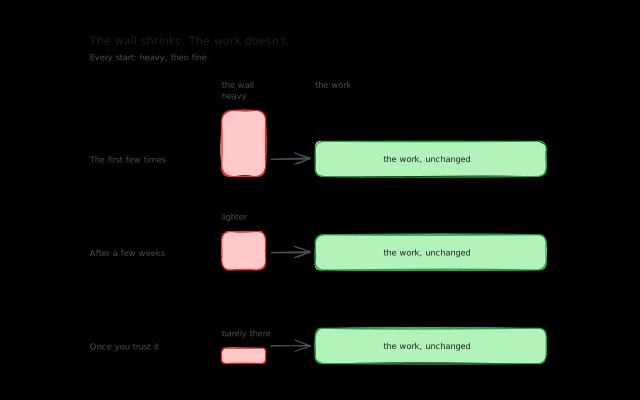
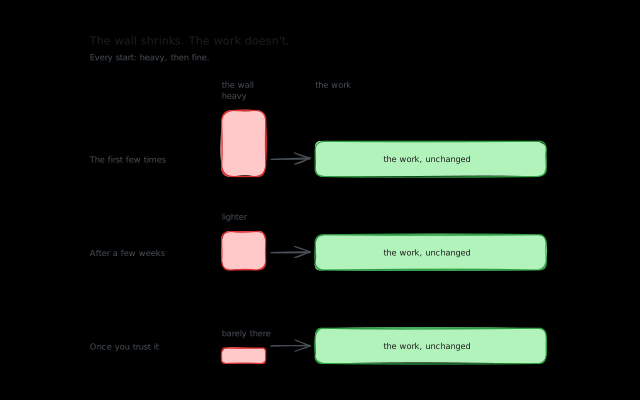
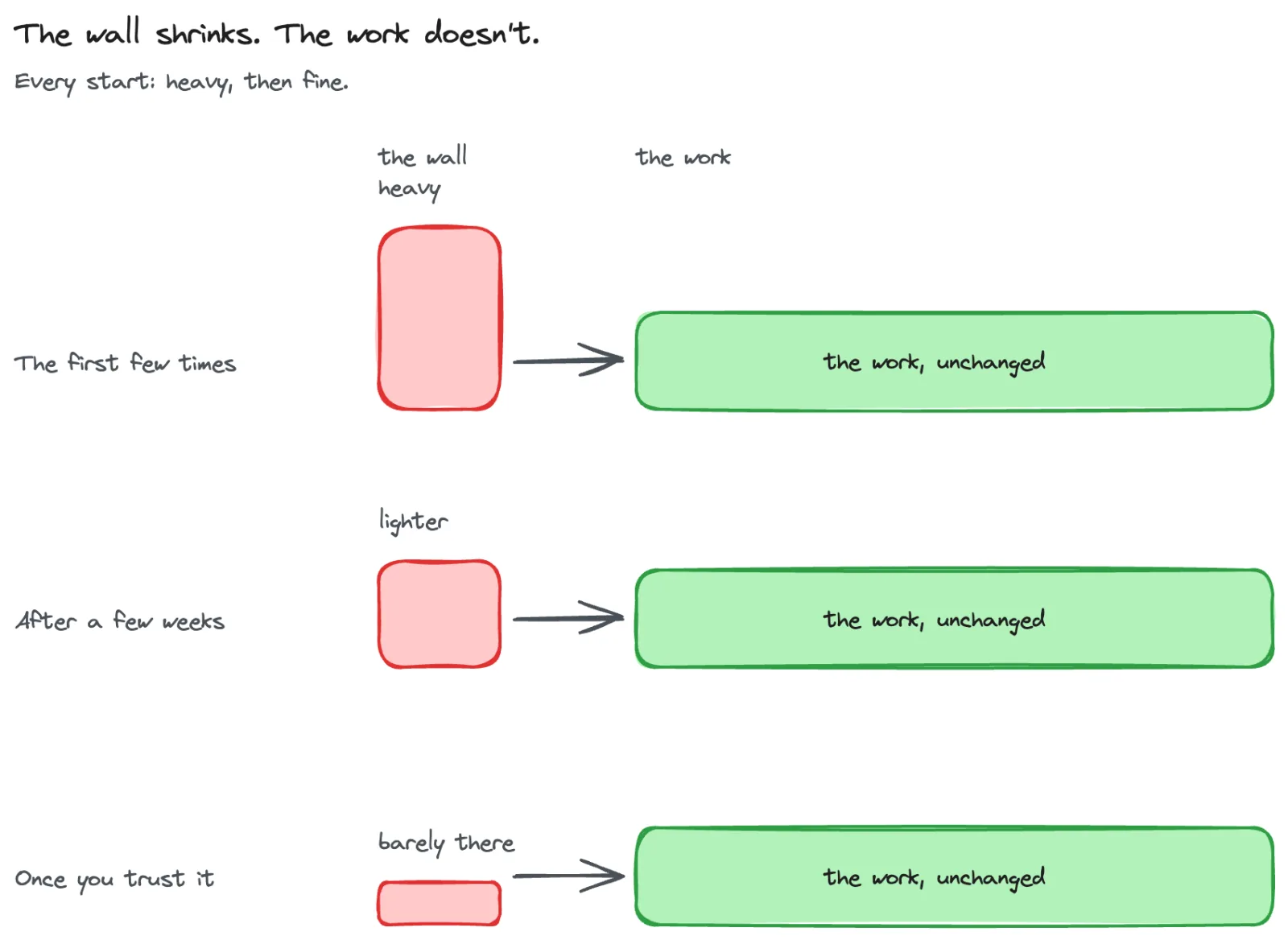
The good news is that it gets easier. Your brain learns the shape of it: the start feels heavy, and five minutes later it’s fine, every time. Once you genuinely trust that arc, once you’ve felt it enough times to believe it, the dread loses its grip. You stop bracing for a struggle that you know from experience only lasts a couple of minutes.
I won’t pretend I’ve solved it. Some mornings the wall is still there and I still catch myself “organizing” instead of doing. But I’ve stopped treating the resistance as a signal that something’s wrong. It’s just what the transition costs. Pay it with a tiny first move, and the rest of the work usually follows.
This is a lot of what I think about while building Koaline, a day planner that nudges you toward the next small thing instead of drowning you in a backlog. The goal was never to make you feel productive while planning. It was to make the actual starting a little easier.
If that resonates, you can try Koaline, which is open and free while in beta, or say hi at david@koaline.app.
Related reading:
- To-Do Lists vs Day Planning: You Need Both as a Freelancer - When a checklist is enough, and when you need a real plan.
- How I Plan My Freelance Week (When I Actually Do It) - The plan-execute-reflect loop I actually use.
- How I Learned to Stop Saying Yes to Everything - Seeing your real capacity changes what you start.